
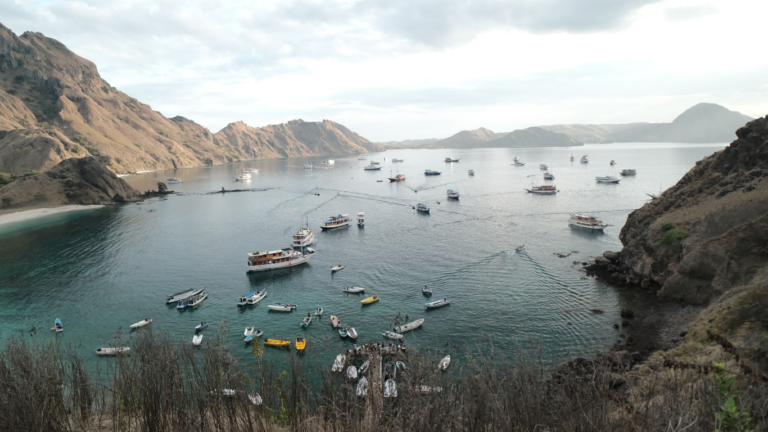
An earthquake in East Nusa Tenggara (NTT) naturally raises questions for travelers planning a holiday in Labuan Bajo and Komodo National Park. When news of a strong earthquake spreads, especially when authorities issue a tsunami advisory or warning, it is understandable for travelers to wonder whether it is still safe to visit Labuan Bajo, whether Komodo sailing tours are operating normally, and whether popular destinations such as Komodo Island, Padar Island, and Pink Beach are still accessible.
On August 15, 2026, a strong earthquake measuring approximately magnitude 7.7 occurred in the Flores Sea, around 30–38 kilometers northeast of Mbay, Nagekeo Regency, East Nusa Tenggara. Following the earthquake, the Meteorology, Climatology, and Geophysical Agency (BMKG) issued a tsunami-related statement, prompting increased attention from residents, businesses, and travelers across parts of NTT.
The event understandably created concern among people who had already booked a Komodo tour, were preparing for a Komodo sailing tour, or were considering traveling to Labuan Bajo in the following weeks. But there is an important geographical point that travelers need to understand:
The earthquake’s epicenter was not in Labuan Bajo or West Manggarai Regency. The earthquake occurred in the Flores Sea northeast of Mbay, in the Nagekeo area of NTT. Labuan Bajo is located much farther west, in West Manggarai Regency on the western tip of Flores Island. This distinction is important when understanding the situation.
Although strong earthquakes can be felt over a wide area and can affect coastal conditions, an earthquake in another part of NTT does not automatically mean that tourism activities in Labuan Bajo are closed or that all Komodo sailing tours must stop. For travelers, however, there is another factor that deserves just as much attention: sea conditions and weather.
September is also a period when Indonesia begins transitioning from the dry season toward wetter and more variable weather patterns in some areas. Wind, waves, currents, and sudden weather changes can influence sailing conditions around the Komodo region.
Therefore, if you are planning to visit Labuan Bajo or join a Komodo sailing tour after the NTT earthquake, the most important approach is not to panic—but to stay informed, remain flexible, and follow the instructions of the relevant authorities and your local tour operator.
Where Did the NTT Earthquake Happen?
One of the biggest misunderstandings following an earthquake is assuming that the entire province or region has been affected in exactly the same way. East Nusa Tenggara is a large province made up of numerous islands and coastal areas. Labuan Bajo, Mbay, Maumere, Kupang, and other destinations are geographically separated from one another.
The August 15, 2026 earthquake was reported in the Flores Sea, approximately 30–38 kilometers northeast of Mbay, Nagekeo Regency, NTT.
Labuan Bajo, meanwhile, is located in West Manggarai Regency, on the western side of Flores Island. This means that the earthquake’s epicenter was not located in Labuan Bajo itself. That geographical difference matters for travelers because the situation in one part of NTT does not necessarily represent the condition of every tourist destination across the province.
For anyone planning a Komodo Island tour from Labuan Bajo, it is therefore important to distinguish between the location of the earthquake and the location of the tourist activities you intend to undertake.
A traveler staying in Labuan Bajo may still feel the effects of a significant earthquake, depending on its strength and distance. However, that does not automatically mean that hotels, restaurants, airports, ports, or tourism activities in Labuan Bajo are closed. The operational situation must instead be assessed based on current conditions, official announcements, port regulations, weather, and safety assessments.
Did the Earthquake Shut Down Tourism in Labuan Bajo?
The short answer is: the earthquake did not automatically mean that tourism in Labuan Bajo was shut down. Labuan Bajo remains one of Indonesia’s major tourism gateways and serves as the main departure point for visitors exploring Komodo National Park.
The tourism industry in the area includes hotels, restaurants, transportation services, diving and snorkeling operators, local guides, boat crews, travel agencies, and Komodo sailing tour operators.
After a major natural event, tourism operations can naturally experience temporary disruption. Travelers may change their plans, airlines or transportation schedules may be reviewed, and some sailing routes can be adjusted depending on safety conditions. However, it is important not to confuse temporary operational adjustments with a complete tourism shutdown.
For travelers who have already booked a trip, the best thing to do is contact the tour operator directly and ask about the latest operational conditions. A responsible tour operator should always prioritize guest safety over maintaining a fixed itinerary. This means that if authorities determine that a particular sailing route or destination is temporarily unsafe, the itinerary may be changed. That is not necessarily a bad sign. In fact, an itinerary change can be a sign that the operator is taking safety seriously.
Is It Safe to Visit Labuan Bajo After the Earthquake?
Safety should always be the first consideration when traveling after a major earthquake. Rather than relying solely on social media posts, travelers should monitor information from official authorities and communicate directly with their accommodation or tour operator.
For visitors planning a Labuan Bajo trip, several factors should be considered:
- The location of the earthquake epicenter
- Official tsunami information
- Current seismic activity
- Port and harbor conditions
- Weather forecasts
- Wave height and wind conditions
- Instructions from maritime authorities
- The operational status of individual sailing routes
- The condition of specific tourist destinations
The most important point is that safety conditions can change.
An area that is safe to visit in the morning may have different sailing conditions later in the day because of wind or waves. Similarly, an itinerary that was planned several weeks earlier may need to be adjusted when the actual weather conditions are assessed on departure day.
This is particularly relevant for travelers joining an open trip Komodo tour, because the boat itinerary is shared among several passengers and must follow the same safety regulations and maritime conditions.

What About Komodo Sailing Tours?
For many travelers, the biggest concern after hearing about the earthquake is whether they can still enjoy a Komodo sailing tour. Komodo sailing tours are highly dependent on maritime conditions. Unlike a land-based city tour, a sailing trip cannot simply continue according to schedule if sea conditions become dangerous.
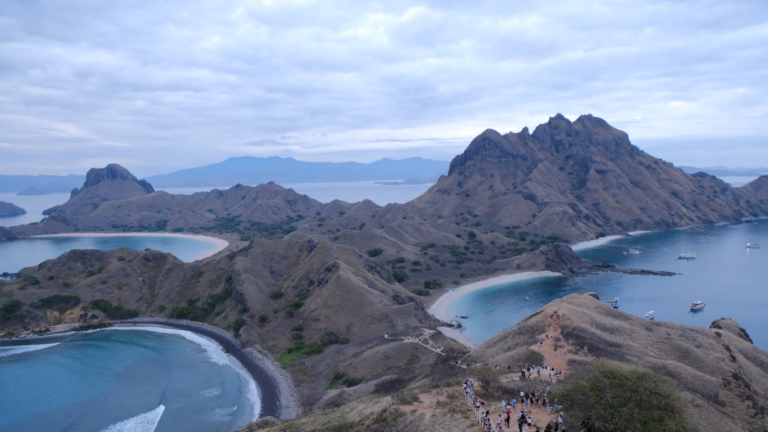
A typical Komodo sailing itinerary may include destinations such as:
- Padar Island
- Komodo Island
- Pink Beach
- Rinca Island
- Manta Point
- Taka Makassar
- Kelor Island
- Kanawa Island
- Kalong Island
- Other snorkeling and island destinations
These locations are spread across the waters surrounding Komodo National Park. The boat must travel between islands, often through open stretches of sea. Because of this, weather, wind, waves, and currents can have a significant influence on the journey.
Following a major earthquake, maritime authorities and local authorities may also increase monitoring of coastal and sea conditions. If a particular route is considered unsafe, sailing restrictions may be introduced. Travelers should understand that these decisions are made for safety—not because Komodo National Park is necessarily closed.
Why Can a Komodo Tour Itinerary Change?
One of the most important things travelers should understand before joining a Komodo Island tour is that an itinerary is a plan, not a guarantee that every destination can be visited under every condition. A normal itinerary might say that the boat will visit Padar Island in the morning, followed by Pink Beach and other snorkeling locations. But actual sailing conditions can require changes.
For example, strong winds can create larger waves around certain islands. If maritime authorities determine that conditions are unsafe, the captain and tour operator may be required to avoid that particular route. In such a situation, the priority is not completing the itinerary exactly as printed.
The priority is getting passengers safely to suitable destinations. This is particularly important around exposed waters such as the areas surrounding Padar Island and other islands in the Komodo region. Therefore, travelers should not be disappointed if a destination is replaced. A professional tour operator will normally look for an alternative destination that offers a similar experience while remaining appropriate for the current conditions.
What Happens If Padar Island Is Temporarily Restricted?
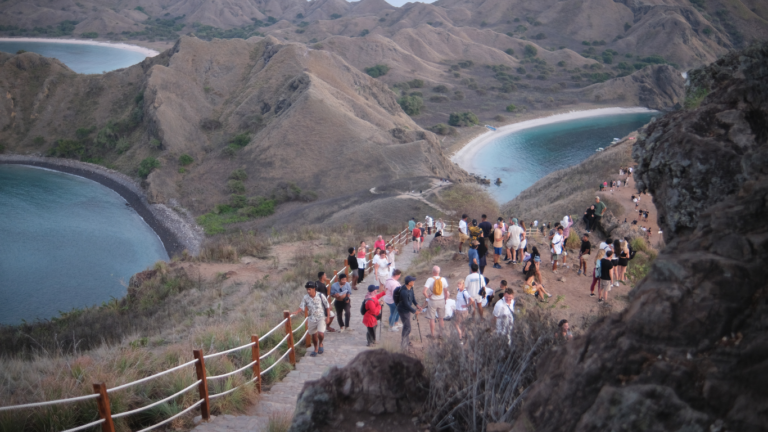
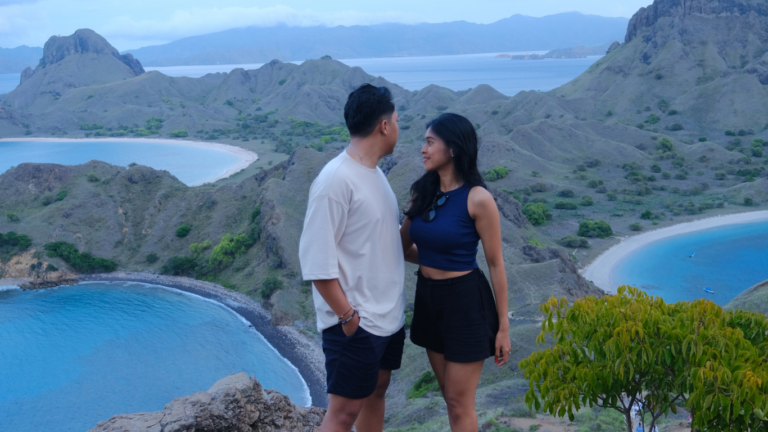
Padar Island is one of the most famous attractions in Komodo National Park. Its dramatic hills, turquoise bays, and iconic three-beach viewpoint have made it one of the most photographed places in Indonesia. Naturally, many travelers consider Padar Island a highlight of their Komodo tour package.
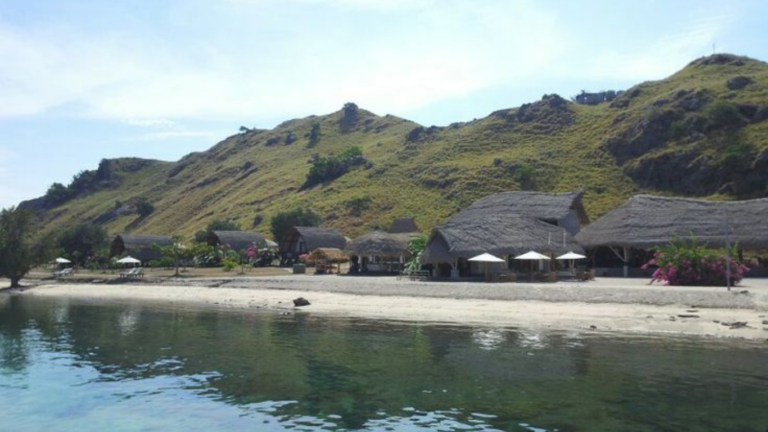
However, Padar Island is not the only beautiful destination in the region. If weather or maritime safety conditions make a visit to Padar Island unsuitable, the tour operator may adjust the route and take guests somewhere else.
Depending on the approved route and current conditions, alternative destinations can include other islands, snorkeling areas, beaches, or viewpoints. The exact alternative depends on the conditions on the day. This is why travelers should avoid thinking of a Komodo sailing trip as a rigid checklist.
The real attraction is the entire landscape of the Komodo region: islands, beaches, coral reefs, marine life, sunsets, and the experience of sailing through one of Indonesia’s most extraordinary natural environments.
What If Komodo Island Cannot Be Visited?
Komodo Island is another major highlight for visitors. It is famous as one of the natural habitats of the Komodo dragon, the world’s largest lizard. For many international travelers, seeing a Komodo dragon in its natural environment is the main reason they book a tour to Komodo Island.
However, the same principle applies. If maritime conditions, government regulations, or safety assessments temporarily restrict access to a destination, the operator must follow those restrictions.
Travelers should never expect a boat captain or tour operator to ignore an official safety instruction simply to complete an itinerary. If Komodo Island is temporarily unavailable, the tour may be redirected toward another approved destination. This can be disappointing, but it is far better than taking unnecessary risks at sea.
The Role of Syahbandar and KSOP in Sailing Safety
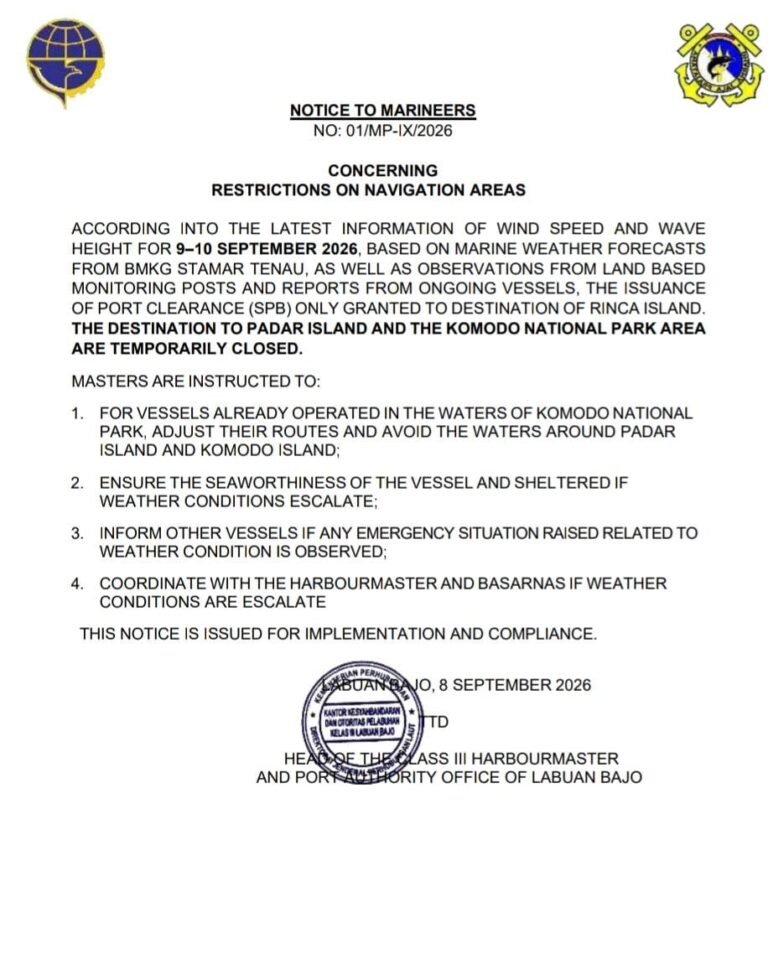
Travelers may hear the terms Syahbandar and KSOP when discussing sailing conditions in Indonesia. These maritime authorities play an important role in vessel and port safety.
For travelers joining a Komodo sailing tour, this means that boat operators cannot simply decide to sail wherever they want regardless of conditions. There are regulations and safety considerations that must be followed. When sea conditions become dangerous, sailing routes can be restricted or departures can be delayed.
This can happen because of:
- High waves
- Strong winds
- Poor visibility
- Severe weather
- Dangerous currents
- Maritime safety alerts
- Post-earthquake conditions
- Other factors affecting navigation
Therefore, if a tour operator tells you that a particular destination cannot be visited because of an official sailing restriction, travelers should understand that the decision is being made with passenger safety in mind.
September Weather: Another Factor Travelers Should Consider
The earthquake is not the only consideration for travelers visiting Labuan Bajo in September.
September is generally associated with the latter part of Indonesia’s dry season, but it can also be a period when weather patterns begin to become more variable as the country moves toward the wetter months.
Weather in Indonesia does not change uniformly across every island. Even during a generally dry period, travelers can encounter strong winds, sudden rain, rough seas, or changing wave conditions. This is especially important for a Komodo sailing tour, because the condition of the sea can be more important than whether it is raining at the harbor.
You might see sunny skies in Labuan Bajo while stronger winds are affecting another part of the sailing route. That is why a local captain and tour operator rely on more than what passengers can see from the beach. They consider forecasts, local sea conditions, official maritime information, and practical experience navigating the region.
Should You Cancel Your Komodo Trip?
Not necessarily. If you are planning a trip to Labuan Bajo after the August 15, 2026 earthquake, cancellation should not be an automatic reaction simply because you saw news about the earthquake. Instead, check the current situation close to your departure date.
Ask your tour operator:
“Is the Komodo sailing tour operating normally on my travel date?”
You can also ask:
“Are there any restrictions on the planned itinerary?”
And:
“If weather or maritime conditions change, what alternative destinations will be available?”
These questions can give you a much clearer picture of the situation than general information about the earthquake alone. If your trip is several weeks away, conditions may be completely different by the time you arrive. Natural events and weather conditions are dynamic, so travelers should always check the latest official information before departure.

What Should Travelers Do Before Traveling to Labuan Bajo?
If you already have a booking or are planning a Komodo tour from Labuan Bajo, a little preparation can make your trip much less stressful.
- Monitor Official Information
Follow official announcements from Indonesian authorities, especially BMKG and relevant maritime authorities. Avoid relying exclusively on viral social media posts. A dramatic headline may describe the earthquake accurately but fail to explain the geographical distance between the epicenter and Labuan Bajo.
- Contact Your Tour Operator
Your local tour operator is one of the best sources of practical information about your sailing schedule. Ask about the latest sailing conditions and whether the itinerary is expected to operate. A local operator can also explain if there are temporary restrictions affecting particular destinations.
- Be Flexible With Your Itinerary
If you are booking a sailing tour, understand that the itinerary can change due to weather and safety conditions. The safest trip is not necessarily the trip that visits every destination on the original schedule. Sometimes the best trip is the one where the captain makes the right decision at the right time.
- Prepare for Changing Weather
Bring appropriate clothing for both sunny and wet conditions. A light rain jacket, dry bag, waterproof phone protection, comfortable shoes, sunscreen, and a hat can all be useful.
- Bring Personal Medication
If you are prone to seasickness, prepare medication before boarding. Even when the weather looks good, boat movement can make some passengers uncomfortable. It is better to bring your own preferred seasickness medicine and take it according to the instructions. Boats may carry basic first-aid supplies, but travelers should not rely on the boat to provide every personal medication they may need.
What About Seasickness During a Komodo Sailing Tour?
For travelers who are worried about the earthquake and sailing conditions, seasickness is another practical consideration. The movement of the boat depends heavily on the route and sea conditions.
Some areas can feel relatively calm, while open-water sections can be noticeably more active. This is why travelers should prepare properly, particularly if they have never taken an overnight sailing trip before.
If you know that you are sensitive to motion, consider:
- Taking appropriate seasickness medication
- Eating light meals before sailing
- Staying hydrated
- Getting enough sleep
- Spending time in areas of the boat with less movement
- Avoiding excessive alcohol
- Informing the crew if you feel unwell
Preparation can make a significant difference.
Why Safety Must Come Before the Itinerary
When travelers book a Komodo tour, they naturally want to see everything.
They want the famous Padar Island viewpoint.
They want to walk on Pink Beach.
They want to see Komodo dragons.
They want to snorkel with colorful marine life.
They want to search for manta rays.
They want to watch the sunset from the boat.
That excitement is completely understandable.
But the ocean does not follow an itinerary.
A professional captain must make decisions based on actual conditions. If a particular destination becomes unsafe, continuing simply because it was advertised would be irresponsible. For this reason, travelers should choose an operator that clearly communicates its safety policy.
At Sail Komodo Tour, the safety and comfort of guests should always come before completing a predetermined list of destinations. When conditions require a change, the crew and tour guide can adjust the route toward other suitable destinations whenever possible. The goal is still to provide travelers with an enjoyable and memorable experience while respecting safety requirements.
Does an Earthquake Mean Labuan Bajo Is Dangerous for Tourists?
It is important to avoid making overly broad conclusions. An earthquake occurring in NTT does not mean that every destination in NTT is equally dangerous. The Flores region includes a large geographical area, and the distance between locations matters.
The August 15 earthquake was centered in the Flores Sea northeast of Mbay, Nagekeo, rather than directly in Labuan Bajo. However, that does not mean travelers should ignore the event.
A major earthquake is a serious natural event, and travelers should always pay attention to official updates. The right approach is awareness without unnecessary panic.
Instead of asking only, “Is NTT safe?”, travelers should ask more specific questions:
- Where was the earthquake located?
- What is the current official alert?
- Is Labuan Bajo operating normally?
- Are flights and transportation operating?
- Are ports open?
- Are sailing routes operating?
- Are particular islands restricted?
- What are the current sea conditions?
These questions provide a much more useful basis for travel decisions.
Why Local Knowledge Matters
One of the advantages of booking a local Labuan Bajo tour operator is access to people who understand the area and its changing conditions. Local captains and crews are familiar with the waters around Flores and the Komodo region.
They understand that conditions can vary significantly from one location to another. They also communicate with relevant authorities and other local maritime stakeholders when determining whether a particular route is suitable.
For international travelers who may not understand Indonesian maritime procedures, having a local team can make the experience easier. Instead of trying to interpret every announcement independently, travelers can ask their tour operator for an explanation of how the situation affects their specific itinerary.
Is It Still Worth Visiting Labuan Bajo?
For travelers who have always wanted to experience the Komodo region, the answer can still be yes—provided they make their decision based on the latest official conditions and understand that sailing plans can change.
Labuan Bajo remains the gateway to one of Indonesia’s most remarkable natural destinations. The town offers a mix of restaurants, hotels, cafés, diving centers, tour operators, and access to Komodo National Park. For many visitors, the highlight is not simply arriving at one island. It is experiencing the entire journey.
From the moment the boat leaves Labuan Bajo, the landscape begins to change. Small islands appear across the horizon. The water changes color. Hills rise from the sea. And somewhere within this extraordinary ecosystem live the famous Komodo dragons. That experience remains unique.

What Should You Expect If Your Itinerary Changes?
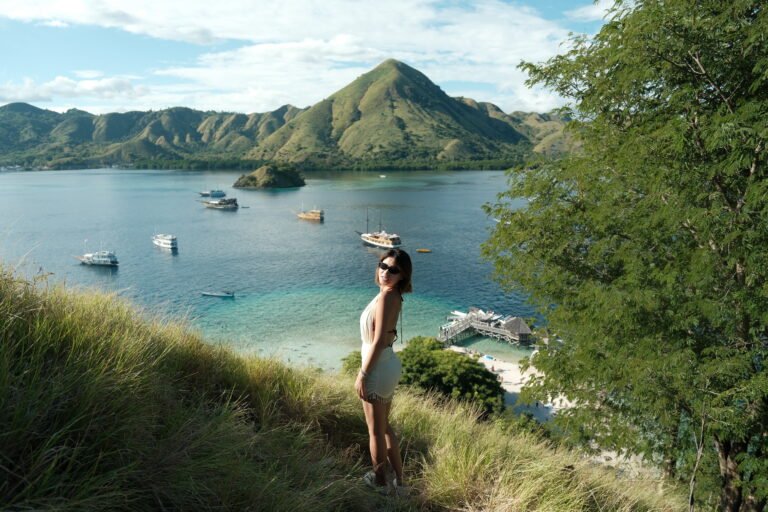
If you are joining an open trip and the regular itinerary changes, the best thing you can do is remain flexible. Your tour guide should explain the reason for the change and, where possible, provide an alternative destination. For example, if a specific island cannot be reached safely, the crew may look for another location that can be visited under the current conditions.
The exact alternative will depend on:
- Weather
- Sea conditions
- Official restrictions
- Distance
- Boat safety
- Time available
- Accessibility of the destination
This is why alternative destinations cannot always be promised in advance. The priority is to choose an option that is both enjoyable and safe.
Frequently Asked Questions About the NTT Earthquake and Labuan Bajo Tourism
Did the August 15, 2026 earthquake happen in Labuan Bajo?
No. The earthquake was centered in the Flores Sea, approximately 30–38 kilometers northeast of Mbay in Nagekeo Regency, East Nusa Tenggara. Labuan Bajo is located in West Manggarai Regency, on the western side of Flores Island.
Was Labuan Bajo affected by the earthquake?
A strong earthquake can be felt across a wide area, so Labuan Bajo may experience shaking or other indirect effects depending on the event. However, the earthquake’s epicenter was not located in Labuan Bajo.
Did the earthquake close tourism in Labuan Bajo?
A major earthquake does not automatically mean that all tourism activities in Labuan Bajo are closed. The operational status of individual activities should be checked with official authorities and local operators.
Can I still join a Komodo sailing tour?
If sailing operations are officially permitted and the route is considered safe, Komodo sailing tours may continue. However, travelers should confirm the latest conditions before departure.
Can the Komodo tour itinerary change?
Yes. Sailing itineraries can change because of weather, waves, currents, maritime restrictions, or other safety considerations.
What happens if Padar Island is not safe to visit?
If Padar Island or another destination is temporarily restricted, the tour operator may adjust the route and visit another suitable destination, depending on official regulations and sea conditions.
What if Komodo Island cannot be visited?
If access to Komodo Island is temporarily restricted, the operator should follow the applicable regulations and safety instructions. An alternative destination may be offered where possible.
Is September a good time for a Komodo tour?
September can be an attractive time to visit the Komodo region, but travelers should remember that sea and weather conditions can change. Always check the latest forecast and operational information before sailing.
Should I cancel my Labuan Bajo holiday because of the earthquake?
Not automatically. Consider the current official situation, your travel date, transportation status, sailing conditions, and information from your tour operator before making a decision.
Final Thoughts: Stay Informed, Stay Flexible, and Enjoy the Journey
The August 15, 2026 earthquake in the Flores Sea understandably caused concern among travelers planning to visit East Nusa Tenggara. A magnitude 7.7 earthquake is a serious event, and the tsunami-related information issued afterward made many travelers question whether it was still appropriate to visit Labuan Bajo and join a Komodo sailing tour.
However, travelers should understand the geography. The earthquake’s epicenter was located in the Flores Sea northeast of Mbay, Nagekeo Regency—not directly in Labuan Bajo or West Manggarai.
Therefore, the occurrence of the earthquake does not automatically mean that tourism in Labuan Bajo has been shut down. At the same time, travelers should never assume that every sailing itinerary will operate exactly as originally planned. Sea conditions, weather, waves, wind, maritime regulations, and official safety instructions can all affect a Komodo sailing tour.
September also brings more variable weather conditions in parts of Indonesia as the dry season transitions toward wetter conditions, making flexibility particularly important for travelers planning an island-hopping adventure.
The most important rule is simple:
Safety comes before the itinerary.
If Syahbandar, KSOP, the captain, or another authorized authority determines that a particular route or destination is unsafe, the itinerary may need to change. That does not mean your Komodo adventure has failed.
The Komodo region has countless beautiful places to explore, and a responsible tour operator will do its best to provide an enjoyable alternative when the original route cannot be followed. For travelers planning their next Komodo tour from Labuan Bajo, the best preparation is to stay informed, communicate with your tour operator, follow official safety information, and keep an open mind. Because sometimes the most memorable part of a sailing adventure is not following the plan perfectly—it is discovering something beautiful along the way.
Ready to Explore Komodo?
If you are planning a Komodo Island tour from Labuan Bajo, Sail Komodo Tour is ready to help you plan your journey. Whether you are looking for a 1 Day Komodo Tour, 2D1N Komodo Sailing Tour, 3D2N Komodo Tour, or a private Komodo boat charter, our team can help you understand the available options and current sailing conditions. Your safety always comes first, while our goal is to make your time in the Komodo region unforgettable.
Planning a trip to Labuan Bajo? Contact Sail Komodo Tour today and ask about the latest Komodo sailing conditions, available tour packages, and itinerary options for your travel date. Your Komodo adventure starts in Labuan Bajo—let’s make it a safe and unforgettable one.