
For centuries, dragons have captured the human imagination. From the fire-breathing beasts of European legends to the wise and powerful dragons of Asian mythology, these mythical creatures have appeared in stories, folklore, and art across cultures worldwide. But what if a real dragon existed today?
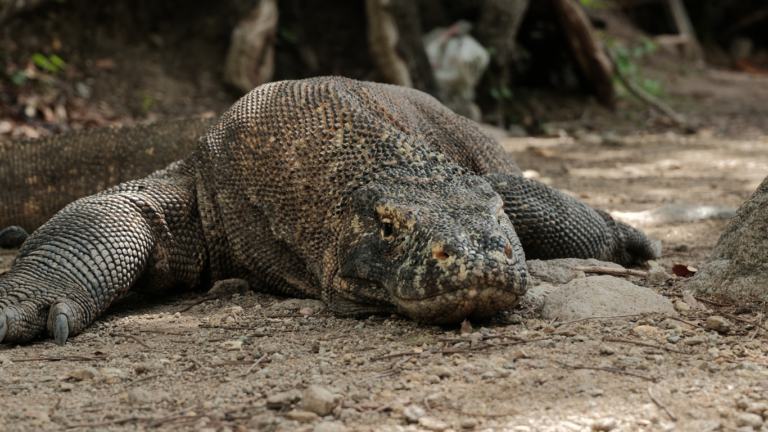
This question often arises when people first hear about the Komodo dragon, the giant reptile that inhabits a handful of Indonesian islands. With its massive body, sharp claws, forked tongue, armored scales, and fearsome reputation, the Komodo dragon certainly looks like something straight out of a fantasy novel.
Yet despite its name, the Komodo dragon is not actually a dragon in the mythical sense. Scientifically, it belongs to the lizard family. So why is it called a “dragon”? Where did the name come from? And how did this giant reptile become known as the world’s closest thing to a real dragon?
Let’s explore the fascinating story behind the Komodo dragon, where myth meets science.
What Exactly Is a Komodo Dragon?
The Komodo dragon (Varanus komodoensis) is the largest living lizard on Earth. Adult males can reach:
- Up to 3 meters (10 feet) in length
- More than 70 kilograms (154 pounds) in weight
- Occasionally over 90 kilograms in the wild
The species is found naturally only in Indonesia, primarily on:
- Komodo Island
- Rinca Island
- Flores Island
- Gili Motang
- Gili Dasami
Today, these islands are protected within the famous Komodo National Park, a UNESCO World Heritage Site.
From a scientific perspective, the Komodo dragon belongs to:
- Kingdom: Animalia
- Class: Reptilia
- Order: Squamata
- Family: Varanidae
- Genus: Varanus
In simple terms, Komodo dragons are giant monitor lizards. Their closest relatives include:
- Asian water monitors
- Savannah monitors
- Nile monitors
- Perentie monitors of Australia
This means that despite the dramatic name, Komodo dragons are biologically lizards—not dragons.

Then Why Is It Called a Dragon?
This is where history becomes interesting. The name “Komodo dragon” was not created by local people. Instead, it emerged after Western explorers first encountered these enormous reptiles in the early 20th century.
When reports of giant lizards living on remote Indonesian islands reached Europe, many people found the stories difficult to believe. Early descriptions included:
- Huge reptilian bodies
- Powerful claws
- Long tails
- Fearsome hunting abilities
To Western audiences, the animals sounded remarkably similar to dragons from ancient legends. As a result, explorers and journalists began referring to them as “dragons.”
The name quickly captured public imagination and became widely used around the world. Over time, “Komodo dragon” became the official English common name for the species.
What Do Local People Call Them?
Long before foreign explorers arrived, local communities already knew these animals well. In parts of Flores and Komodo Island, traditional names included:
Ora
The most common local name.
Buaya Darat
Meaning “land crocodile.”
Naga Darat
Meaning “land dragon.”
Interestingly, some local communities had already associated the animal with dragon-like characteristics due to its size and power. This helped reinforce the “dragon” image when Western visitors later popularized the term.
Are Komodo Dragons Related to Mythical Dragons?
Scientifically, no.
Mythical dragons are fictional creatures that appear in legends and folklore. They are often described as:
- Flying
- Breathing fire
- Possessing magical powers
- Guarding treasures
- Living for centuries
Komodo dragons possess none of these traits.However, they do share several characteristics that may explain why people associate them with dragons:
Large Size
Most lizards are relatively small. Komodo dragons can grow larger than many humans.
Powerful Appearance
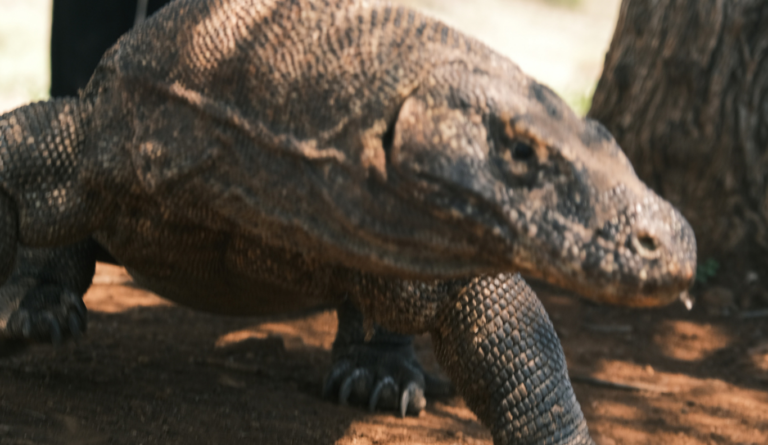
Their muscular bodies, sharp claws, and armored scales create a prehistoric appearance.
Predatory Nature
They are apex predators capable of hunting large prey.
Ancient Lineage
Their evolutionary history stretches back millions of years.
Combined, these features make them feel remarkably dragon-like.
The Ancient Origins of Komodo Dragons
Although Komodo dragons are not mythical dragons, their evolutionary story is no less impressive. Scientists believe their ancestors evolved millions of years ago. Research suggests that giant monitor lizards first appeared in Australia before spreading through Southeast Asia.
Fossil evidence indicates that ancestors of modern Komodo dragons existed as far back as:
Four Million Years Ago
These ancient reptiles belonged to a lineage of giant monitor lizards that once inhabited much of the region. While many large reptile species disappeared over time, Komodo dragons survived on isolated Indonesian islands. Their survival is one reason they are often described as “living fossils.”
The Closest Thing to a Real Dragon?
Many wildlife experts describe the Komodo dragon as the closest thing to a real dragon living today. There are several reasons for this comparison.
Their Appearance
Komodo dragons have:
- Thick scales
- Powerful jaws
- Long tails
- Sharp claws
Their appearance closely resembles how dragons are portrayed in fantasy artwork.
Their Hunting Style
Komodo dragons are highly effective predators.
They can hunt:
- Deer
- Wild boar
- Water buffalo
- Smaller reptiles
Watching a Komodo dragon hunt can feel like observing a creature from another age.
The Role of Komodo Dragons in Tourism
The Komodo dragon has become one of Indonesia’s most important wildlife attractions. Visitors from around the world travel to:
- Komodo Island
- Rinca Island
- Komodo National Park
to see these remarkable creatures in their natural habitat. For many travelers, encountering a Komodo dragon is a bucket-list experience comparable to:
- Seeing gorillas in Rwanda
- Spotting polar bears in Canada
- Watching lions in Africa
The species has become the symbol of the entire region.
Myth vs. Science: The Final Verdict
So, is the Komodo dragon a real dragon? The answer depends on how you define a dragon.
According to Mythology:
No.
Komodo dragons do not fly, breathe fire, or possess magical powers.
According to Science:
No.
They are giant monitor lizards belonging to the family Varanidae.
According to Popular Imagination:
Perhaps.
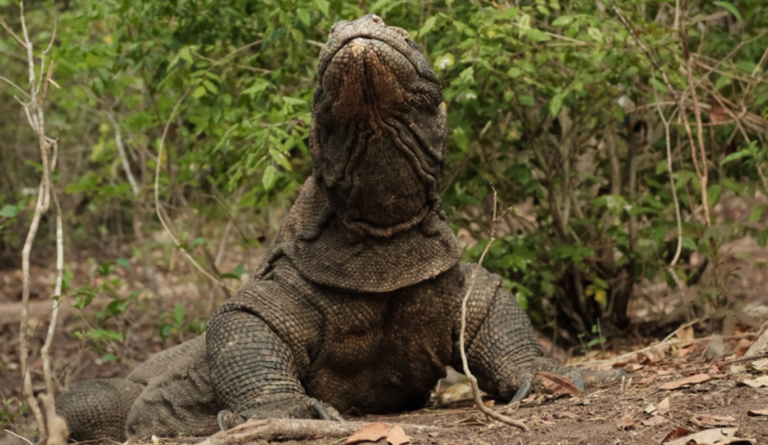
Their enormous size, prehistoric appearance, ancient ancestry, and powerful behavior make them the closest thing many people will ever see to a real dragon. In many ways, the Komodo dragon represents the perfect blend of myth and reality.
Conclusion
The Komodo dragon is not a true dragon from legend, nor is it a descendant of mythical creatures. Scientifically, it is a giant monitor lizard that evolved over millions of years and survives today on a handful of Indonesian islands.
Yet the name “dragon” remains remarkably fitting. Early explorers were so astonished by the animal’s size and appearance that they compared it to the legendary dragons of folklore, and the name has endured ever since.
Whether viewed through the lens of science or imagination, the Komodo dragon remains one of the most extraordinary animals on Earth—a living reminder that nature can sometimes be just as fascinating as mythology.
See the World’s Closest Thing to a Real Dragon with Sail Komodo Tour
Ready to meet the legendary Komodo dragon in its natural habitat? Join Sail Komodo Tour and explore the breathtaking beauty of Komodo National Park. From guided dragon treks on Komodo and Rinca Island to unforgettable sailing adventures across Padar Island, Pink Beach, Manta Point, and Taka Makassar, our tours offer the ultimate way to experience Indonesia’s most iconic wildlife destination.