
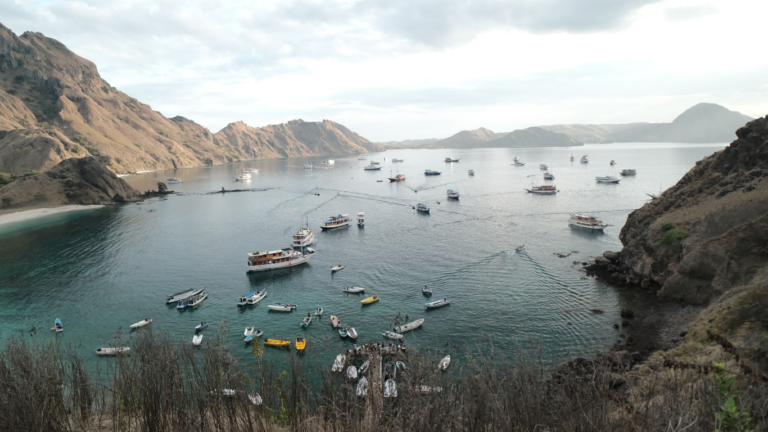
There is a big difference between simply visiting Komodo National Park and actually experiencing it. A first-time visitor might arrive in Labuan Bajo, join a boat tour, visit Padar Island and Pink Beach, take a few photos with the Komodo dragons, and return home feeling satisfied. But if you want to understand what makes this part of Indonesia so special, there are a few things worth knowing before you step onto the boat.
A good Komodo Tour is not only about checking famous destinations off a list. It is about understanding the rhythm of the islands, knowing when to visit certain places, respecting the wildlife, choosing the right boat, and being prepared for the realities of traveling through a remote national park. Some of the best experiences happen between the famous stops, whether it is watching the sunrise from the deck of a Phinisi boat, swimming in a quiet bay before other boats arrive, or sitting with local crew members while they prepare dinner as the sun disappears behind the islands.
For travelers coming to Labuan Bajo for the first time, the number of choices can be overwhelming. There are one-day tours, 2 Days 1 Night trips, 3 Days 2 Nights liveaboard experiences, longer sailing routes from Lombok, private charters, and different classes of Phinisi boats. Knowing how these options work can make a significant difference to your experience. So, if you’re planning a Komodo Trip and want to experience the national park in a more relaxed and authentic way, here are some insider tips worth knowing before you go.
Start in Labuan Bajo, but Don't Treat It as Just a Departure Point
For most international travelers, Labuan Bajo is the starting point for exploring Komodo National Park. The town has changed significantly over the past few years, with new hotels, restaurants, cafés, dive centers, and tour operators appearing throughout the area. It can be tempting to arrive late at night, sleep for a few hours, and immediately board your boat the next morning, but if your schedule allows, spending at least one night in Labuan Bajo is worth considering.
The town itself offers a different perspective on the region. Early in the morning, the waterfront begins to come alive as fishermen prepare their boats and local businesses open for the day. In the afternoon, the harbor becomes busier as Phinisi boats return from the national park, while travelers gather around cafés and restaurants overlooking the sea. By sunset, the western horizon becomes one of the best places to watch the sky change color.
Spending some time in Labuan Bajo also gives you a buffer in case your flight is delayed. This is particularly useful if you’re joining a Komodo Sailing Tour early the next morning. Missing a boat because of a delayed flight can create unnecessary stress, especially for multi-day trips that cannot simply wait for individual passengers. If possible, arrive at least one day before your sailing departure. It gives you time to rest, collect your luggage, buy anything you forgot to pack, and start your Komodo adventure without rushing.
Choose Your Komodo Tour Based on the Experience You Want
One of the biggest mistakes first-time visitors make is choosing a Komodo Tour based only on price. Of course, budget matters, but the cheapest tour isn’t always the best option for your travel style. Think about what you actually want from the trip.
If you have limited time and mainly want to see the major highlights, a One Day Komodo Tour from Labuan Bajo can work well. These trips typically focus on iconic locations such as Padar Island, Pink Beach, Komodo Island, and snorkeling spots. The schedule is busy, but it allows travelers with only one free day to experience the national park.
If you want something slower, a 2 Days 1 Night or 3 Days 2 Nights Komodo Trip is usually a better choice. Spending the night on a Phinisi boat changes the experience completely. You are no longer simply moving between tourist attractions; you’re waking up in the middle of the national park, watching the sunrise from the boat, and having more time to enjoy the islands.
For travelers who want the journey to be part of the adventure, a longer Komodo Trip from Lombok offers a completely different experience. The route takes several days and crosses open water before reaching Komodo National Park. It can include destinations such as Kenawa Island and Saleh Bay, depending on the itinerary, making the journey feel more like an expedition than a simple island tour. There is no single “best” Komodo Tour. The best option depends on how much time you have, how comfortable you are with sailing, your budget, and whether you prefer a fast-paced itinerary or a slower experience.
Don't Judge the National Park by Its Most Famous Photos
Padar Island is probably the image most people associate with Komodo National Park. The famous viewpoint overlooking three curved bays has become one of Indonesia’s most recognizable travel photographs. It is absolutely worth visiting, but Padar is only one small part of the national park.
The same applies to Pink Beach. Its unusual pink-colored sand is beautiful, but the experience becomes even more memorable when you take time to swim and snorkel rather than simply spend ten minutes taking photos.
The national park is made up of a remarkable collection of islands, bays, beaches, reefs, and marine habitats. Depending on your itinerary, you may visit places such as Kelor Island, Kanawa Island, Taka Makassar, Manta Point, Siaba, Sebayur, Rinca Island, or Komodo Island.
Some locations may be quieter than the most famous attractions, particularly if your captain or tour operator can adjust the itinerary according to weather and conditions. This is one reason local knowledge matters. The most popular destination is not necessarily the place where you will have your best experience. Sometimes the most memorable stop is simply a quiet beach where you have the water almost entirely to yourself.
Visit Padar Island Early
If there is one piece of advice almost every experienced Komodo Tour guide will give you, it is this: wake up early for Padar Island.
The climb to the viewpoint is not extremely long, but the combination of tropical heat and steep steps can make it feel more challenging than expected. Starting early means you can climb before the sun becomes too strong, and the morning light often creates beautiful conditions for photography. There is also something special about reaching the viewpoint before the day becomes busy. You can hear the wind moving across the hills, watch the boats slowly appearing in the bays below, and see the colors of the landscape change as the sun rises.
Bring drinking water, wear proper footwear, and take your time. You don’t need to race to the top. The journey itself is part of the experience. And remember that Padar Island is a protected environment. Stay on designated paths and avoid leaving trash behind.
Don't Rush Your Time With the Komodo Dragons
Seeing a Komodo Dragon in the wild is one of the main reasons travelers visit the national park. These ancient reptiles are found only in a small number of islands in Indonesia, making the experience genuinely unique.
However, seeing a Komodo dragon is not like visiting a zoo. The animals are wild, unpredictable, and potentially dangerous. That is why every visitor must follow the instructions of the park rangers. One of the best insider tips is to slow down and observe rather than immediately reaching for your camera. Watch how the animal moves, how it responds to its surroundings, and how the ranger positions the group at a safe distance.
Never attempt to approach a Komodo dragon on your own, even if it appears to be sleeping or seems far away. These animals can move surprisingly quickly, and their behavior can change without warning. Keep your distance, listen to the ranger, and avoid sudden movements. A respectful encounter is much more meaningful than getting the closest possible photograph.
Understand That Komodo Dragons Are Not the Only Wildlife Here
It is easy to focus entirely on Komodo dragons and forget that the national park is one of Indonesia’s most important marine ecosystems. Under the surface, there is an entirely different world.
The waters around Komodo are home to coral reefs, reef fish, sea turtles, sharks, rays, and other marine life. Depending on the season and conditions, travelers may also encounter manta rays at locations such as Manta Point. For many people, snorkeling becomes the unexpected highlight of their Komodo Sailing Tour.
The experience can be completely different from one day to another. Ocean conditions, visibility, currents, and wildlife activity all influence what you see. That is part of the adventure. A responsible tour operator should never guarantee that you will see a specific wild animal because nature does not work on a schedule.
If you’re lucky enough to encounter manta rays, give them plenty of space. Don’t chase them or attempt to touch them. Watching these enormous animals glide peacefully through the water from a respectful distance is far more rewarding.
Learn to Love the Phinisi Boat
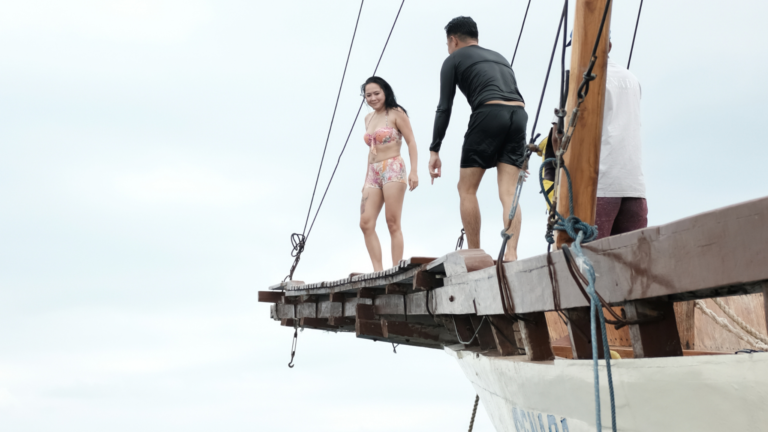
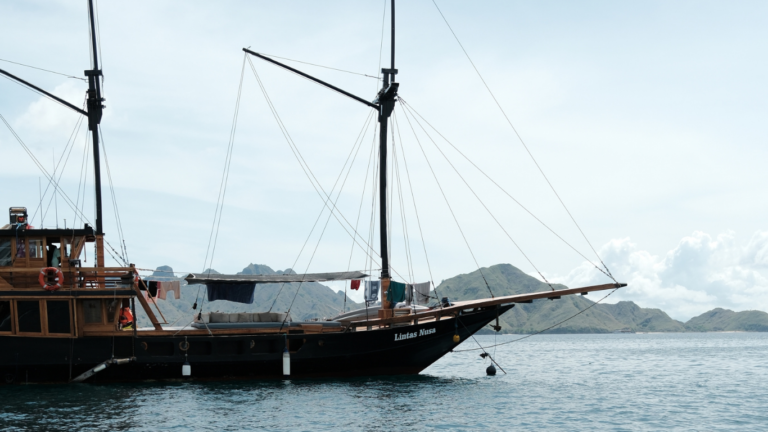
A traditional Indonesian Phinisi boat is more than transportation during a multi-day Komodo Tour. For many travelers, it becomes part of the destination itself.
Life on a Phinisi is simple. You wake up with the ocean outside your window, spend your day exploring islands and snorkeling, return to the boat in the afternoon, and watch the sunset from the deck. At night, the sound of the water replaces the noise of traffic and city life. If you’re used to luxury hotels, don’t expect exactly the same experience on a liveaboard. Cabin sizes can be smaller, internet connections may be limited, and the boat is constantly exposed to the elements. But that simplicity is precisely what makes the experience special.
If comfort is important to you, check the boat specifications carefully before booking. Look at cabin size, private bathroom availability, air conditioning, number of guests, deck space, and whether the boat is a sharing trip or private charter. Choosing the right boat can make a huge difference to your overall experience.
Don't Pack Like You're Going to a Resort
A Komodo trip requires a slightly different packing strategy. You don’t need a huge suitcase filled with clothes. In fact, traveling light makes life much easier on a Phinisi boat.
Bring lightweight clothing, swimwear, comfortable shoes, sunscreen, sunglasses, a hat, personal medication, and a small waterproof bag for electronics. A dry bag is particularly useful for keeping phones, cameras, passports, and other valuables safe around beaches and snorkeling spots.
Don’t forget a reusable water bottle. Staying hydrated is important because you will spend a lot of time outdoors in tropical conditions. If you’re prone to seasickness, bring your preferred medication before boarding. Although boats generally carry basic first-aid supplies, it’s always better to have your personal medicine with you.
For travelers joining a Komodo Trip from Lombok, preparation for sailing is particularly important because the route includes a longer open-sea crossing. The Sape Strait, between Sumbawa and Flores, can have stronger waves, particularly during the second night of the journey.
Respect the Rhythm of the Sea
One of the best ways to experience Komodo like a local is to accept that you cannot control everything. The weather determines the sea conditions. Tides affect snorkeling locations. Wind can change your itinerary. Wildlife appears when it wants to appear.
This can be difficult for travelers who are used to tightly scheduled holidays. But the ocean doesn’t operate according to a Google Calendar. Sometimes your captain may recommend visiting an island earlier because the wind is expected to increase later in the day. Sometimes a snorkeling location may be changed because the current is too strong. Sometimes a planned wildlife encounter doesn’t happen at all.
These aren’t necessarily signs of a bad tour. They are simply part of traveling through a natural environment. A good captain prioritizes safety and conditions rather than forcing an itinerary just because it appears on a printed schedule.
Try to Travel During the Right Season
The best time for a Komodo Tour depends partly on what you want to experience. The dry season is generally popular because travelers can expect plenty of sunshine and relatively dry conditions. The landscapes around the islands can become much drier and more golden, creating the dramatic scenery that appears in many photographs of Komodo.
During other periods of the year, the islands can look greener and more vibrant. Weather conditions can be less predictable, but there can also be fewer visitors at certain destinations. If you are particularly interested in marine life, talk to your tour operator about seasonal conditions before booking rather than assuming that one month is automatically best for everything.
There is no single perfect month for every traveler. Your ideal travel period depends on whether you prioritize hiking, snorkeling, photography, wildlife, weather, or fewer crowds.
Eat Like You Are on a Sailing Adventure
Food is an underrated part of a multi-day Komodo Trip. On a Phinisi boat, meals are generally simple but filling, with rice, vegetables, chicken, fish, noodles, fruit, and other Indonesian dishes commonly appearing throughout the journey.
Don’t expect a restaurant menu with dozens of choices. You’re traveling on a wooden boat in a remote national park, not staying at a five-star resort. But there is something satisfying about eating a simple meal on the deck while surrounded by nothing but ocean. If you have allergies, dietary restrictions, or specific food requirements, tell your tour operator before departure. The earlier they know, the easier it is to prepare suitable meals.
Leave the "Tourist Mindset" Behind
Perhaps the most important insider tip is to stop trying to experience Komodo exactly as it appears on Instagram.
The national park is beautiful, but it is not a theme park designed around perfect photographs. You might arrive at a viewpoint when clouds cover the sun. The water at a snorkeling spot might not be perfectly clear. You might spend an hour looking for manta rays without seeing one. A Komodo dragon might appear only briefly before disappearing into the forest.
That’s okay. Traveling like a local means learning to appreciate the destination as it is rather than expecting it to reproduce a photograph you saw online. Some of the best moments happen unexpectedly: a quiet sunrise, a conversation with the crew, dolphins appearing beside the boat, or swimming in a small bay that wasn’t even on your original list. Those moments cannot always be planned.
Support Local Communities When You Can
Tourism plays an important role in the economy around Labuan Bajo and the surrounding islands. Choosing local businesses where possible is one simple way travelers can contribute to the communities that make these journeys possible. Eat at local restaurants, buy souvenirs from local artisans, use local guides, and choose tour operators that employ local crew members.
You can also reduce your environmental impact by avoiding single-use plastics, bringing reusable bottles, taking your rubbish with you, and never touching coral or marine animals while snorkeling. Komodo National Park is a protected area, and the long-term future of tourism depends on visitors treating it responsibly.
Choose a Responsible Komodo Tour Operator
Your tour operator has a major influence on your experience. Before booking, don’t only compare prices. Look at what is actually included, the condition of the boat, safety equipment, crew experience, itinerary, passenger capacity, and reviews from previous travelers.
A responsible operator should be transparent about the trip and should not promise unrealistic wildlife encounters.
Safety should also be taken seriously. Check whether the boat has life jackets, a life raft, fire extinguishers, first-aid equipment, and other required safety equipment. For a multi-day Komodo Sailing Tour, these details matter much more than having the cheapest possible price.
Sometimes Less Is More
If you have several days in Komodo National Park, resist the temptation to visit every possible island. A packed itinerary can leave you exhausted.
Spending more time at fewer locations can actually make the experience better. Instead of rushing off the boat, taking ten photographs, and immediately moving to the next destination, give yourself time to swim, relax, explore, and simply enjoy where you are. This is especially true on a 3 Days 2 Nights Komodo Trip or longer sailing itinerary.
The beauty of a liveaboard is that you don’t have to rush back to a hotel every evening. The boat itself becomes your accommodation, restaurant, transportation, and viewing platform. Use that freedom.
Experience Komodo Beyond the Checklist
The most memorable Komodo Tour isn’t necessarily the one that visits the greatest number of destinations. It’s the one that gives you enough time to appreciate where you are. Yes, you should see Padar Island. Yes, seeing a Komodo dragon should be high on your list. Pink Beach, snorkeling, and manta rays are also worth experiencing. But don’t let the checklist become the entire trip.
Spend time watching the sunrise. Talk to your crew. Learn a little about the islands. Ask questions about the local communities and wildlife. Put your phone away for a while and watch the sea. That’s when Komodo begins to feel less like a tourist destination and more like a living part of Indonesia.
Final Thoughts: How to Experience Komodo Like a Local
There is no secret formula for experiencing Komodo National Park like a local. It comes down to slowing down, being flexible, respecting nature, and understanding that the journey is just as important as the destinations.
Choose your Komodo Tour based on the experience you actually want rather than simply choosing the cheapest package. If you have limited time, a One Day Tour can introduce you to the highlights. If you want to experience life aboard a Phinisi, consider a 2D1N or 3D2N sailing trip from Labuan Bajo. And if you’re looking for a longer adventure, a 4D3N route from Lombok can take you through a much broader part of the region before reaching Komodo National Park.
Most importantly, come with an open mind. The sea may change your itinerary. The weather may not cooperate. Wildlife may not appear exactly when you expect it. But those unpredictable moments are part of what makes Komodo special. The islands are not just somewhere to take photographs and tick destinations off a list. They are home to one of the world’s most remarkable reptiles, extraordinary marine ecosystems, traditional communities, and landscapes that have remained relatively untouched for generations.
Travel slowly. Respect the environment. Listen to your local crew. Leave only footprints and take your memories home. And when you finally sit on the deck of your Phinisi boat at sunset, surrounded by the islands of Komodo National Park, you’ll understand that experiencing Komodo like a local isn’t about doing something completely different from other travelers. It’s about seeing the same destination differently.
Ready to Explore Komodo National Park?
Planning your first Komodo Trip can be overwhelming with so many routes, boats, and itineraries available. Whether you’re interested in a One Day Komodo Tour, 2D1N, 3D2N Komodo Sailing Tour, 4D3N trip from Lombok, or a private Phinisi charter, choosing the right itinerary can make your experience much more enjoyable.
Sail Komodo Tour helps travelers explore Komodo National Park with local experience, carefully selected itineraries, and experienced crews. From Padar Island and Pink Beach to Komodo Island, Manta Point, Taka Makassar, and other hidden corners of the national park, we’re here to help you find the trip that fits your travel plans.
Ready to explore Komodo like a local? Plan your Komodo Tour with Sail Komodo Tour and start your adventure from Labuan Bajo or Lombok